
Advocacy begins with preparation.
A strong advocate understands that influence grows from credibility, and credibility grows from disciplined effort over time. That principle guided me through prison, and it continues to guide the work we do at Prison Professors.
If someone wants to become a strong advocate—whether inside prison or outside—there are a few lessons worth considering.
First, define success clearly. Without clarity, effort scatters. A person must decide what outcome he or she is pursuing. Remember that the right decision at the wrong time is the wrong decision. At different stages in the journey, a person should advocate for different results. All advocacy should be in harmony, but a person should strive for success with clear direction. If a person is going through the criminal justice system, what outcome should a person pursue:
A lower charge?
A lower sentence?
Transfer to lower security?
Access to work release?
Community confinement?
Clemency?
Clear definition directs energy. All things are possible when a person seeks guidance from God, and when a person moves forward with 100% commitment to success.
Second, build assets. Advocacy requires persuasion. Persuasion requires evidence. That evidence comes in the form of documented growth. We built the profiles section of our platform to offer opportunities for members of our community to memorialize their journey. They can write biographies, journals, book reports, and release plans. Through their efforts, they can build evolving release plans.
The profile can become a portfolio that persuades even a skeptical audience to see something more than what appears in a presentence investigation report.
Third, align actions with long-term goals. A strong advocate understands that every decision today influences what becomes possible tomorrow. Writing consistently. Avoiding disciplinary infractions. Helping others. Those actions over time build credibility.
Fourth, document everything. Words matter. A record matters. Documentation transforms effort into proof.
This week provided several reminders of those lessons.
On Monday, I made presentations at FCC Petersburg. I emphasized to the audience that each person must write a new story—a story that advances them as candidates for higher levels of liberty at the earliest possible time. Building a profile would support that story with assets that persuade even cynical observers.
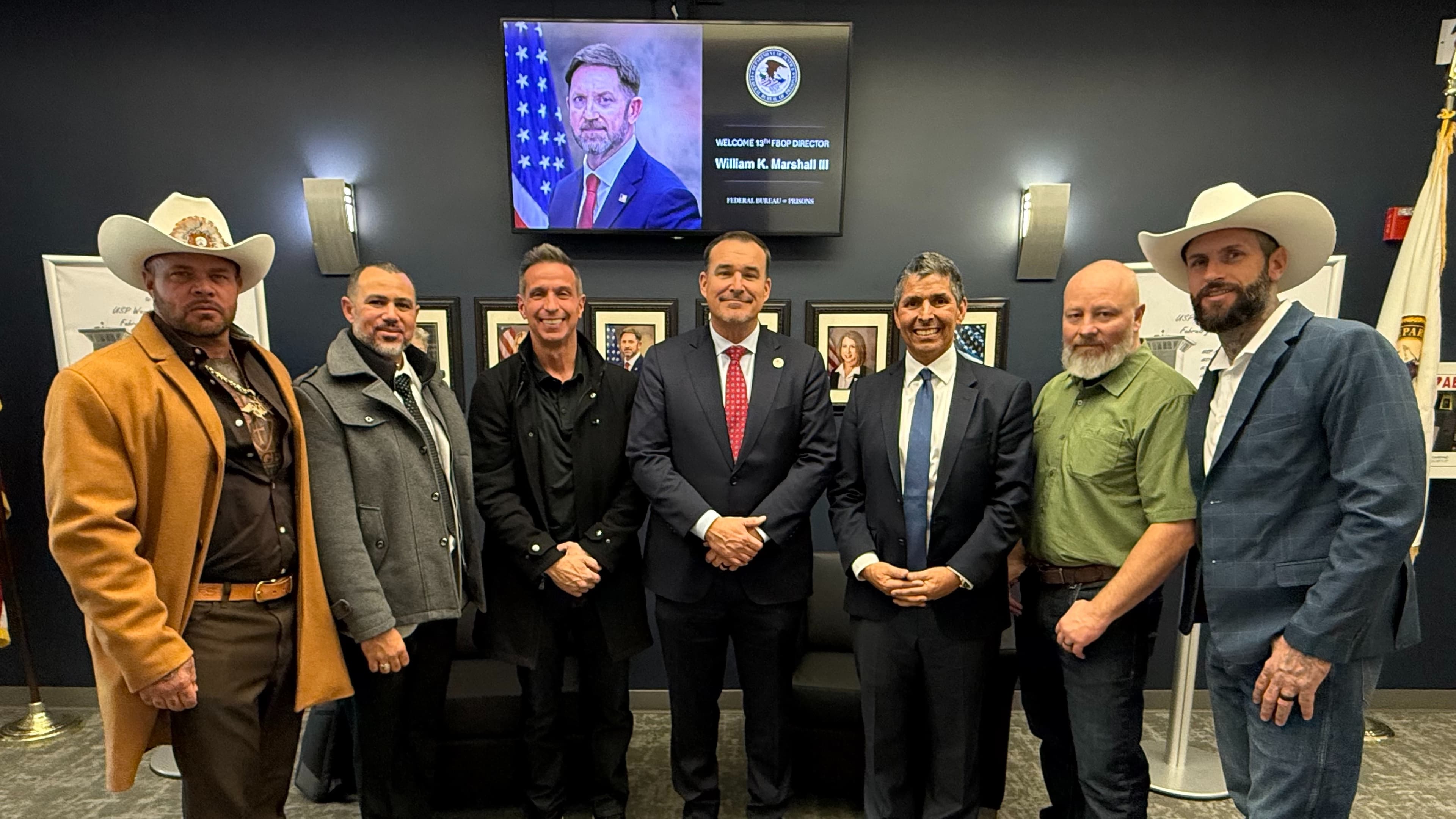
On Tuesday, I had the opportunity to demonstrate our platform to the Deputy Director of the Federal Bureau of Prisons. Before the presentation, I checked the leaderboard to see how Petersburg ranked. At the top of the list for Petersburg, I saw a new profile for Andrew Stafford:
Andrew Stafford: https://profiles.prisonprofessors.org/profile/andrew-stafford
I do not know Andrew personally. But after Monday’s presentation, he took initiative and began building his profile. When I demonstrated the platform at headquarters, the Deputy Director commented that he appreciated seeing people take initiative on their own.
That is advocacy in action.
Andrew did not ask me to speak for him. He built evidence that spoke for itself.
On Wednesday, I participated in a training session for wardens of all the high-security federal prisons in the United States, along with regional directors and senior leaders in the agency. When the Deputy Director asked about the initiative of using formerly incarcerated people as a resource to inspire change, the wardens expressed enthusiasm. They recognized that programs grounded in preparation and accountability improved the culture of confinement.
I appreciated the opportunity to speak with the Director, the Deputy Director, the regional directors, and the wardens. Moments like that do not happen because of one conversation. They happen because of years of documented effort, data, and disciplined messaging.
It feels as if momentum is building.
By the end of this year, the agency expects to distribute tablets to every person in federal prison. That development will provide more access to educational resources. Prison Professors will continue producing content—courses, workbooks, audio, and tools—so that anyone willing to prepare can reach for his or her highest potential.
When individuals inside prison build portfolios that show their efforts, leaders of the prison system and beyond see measurable progress. That progress can lead to conversations. Those conversations can lead to building coalitions of support. That strategy worked for me, and it’s the reasons that our team at Prison Professors make a commitment to building our platform for others.
It’s our way to be the change that we want to see in the world.