

Last week, I had the privilege of speaking at the Federal Bureau of Prisons' Wardens Conference in Washington, D.C. The audience included every federal warden in the country, along with other leaders responsible for operating America's federal prison system.
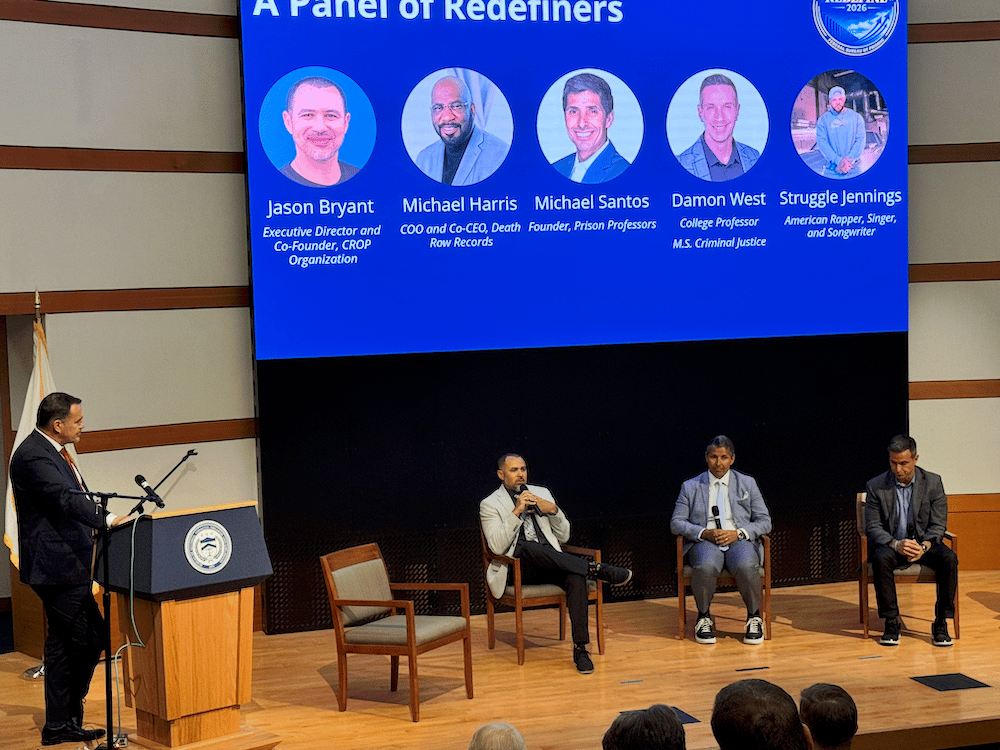
During my presentation, I thanked the Bureau of Prisons for opening its institutions to Prison Professors. Over the past several years, those partnerships have allowed us to bring free educational resources into prisons across the country. Together, we share a common interest: preparing people in prison to return home as law-abiding, contributing citizens.
As I reflected on those conversations after the conference, I found myself thinking about a document that has influenced societies around the world for more than seventy-five years.
"All human beings are born free and equal in dignity and rights."
— Article 1, Universal Declaration of Human Rights
Those words have guided international discussions on human rights since 1948. They also raise an important question for those of us who care about America's criminal justice system:
What does human dignity mean after a person has been convicted of a crime?
More than seventy-five years ago, the United Nations adopted the Universal Declaration of Human Rights in response to one of history's darkest chapters. After witnessing the devastation of World War II, representatives from around the world sought to affirm a simple but profound truth:
Every human being possesses inherent dignity.
That idea deserves reflection, especially when we think about prisons.
Some people assume that discussions of human rights are incompatible with accountability. I disagree.
I served twenty-six years in federal prison because of crimes I committed. I do not question society's right to hold me accountable. Accountability is essential. Justice requires consequences. Victims deserve recognition, and society has an inherent interest in protecting communities.
But accountability and dignity are not opposites.
The Universal Declaration does not suggest that people should escape responsibility for their actions. Rather, it recognizes that every person remains human, regardless of the mistakes he has made.
When society sends someone to prison, it deprives that person of liberty. It should not deprive that person of the opportunity to grow, to reconcile with those who have been harmed whenever possible, or to prepare for a better future.
Throughout my imprisonment, I came to understand that my future depended less on the sentence imposed by a judge than on the decisions I made every day afterward. Books changed my life. Education changed my thinking. Purpose changed my behavior.
No one forced me to pursue those opportunities. I chose to prepare for success upon release, learning from every leader I could find.
I also recognize that not everyone has access to the same opportunities. Too many people spend years in prison without meaningful educational resources, mentors, or pathways that encourage personal development.
That is where I believe society has an opportunity.
Article 1 of the Universal Declaration reminds us that every person possesses inherent dignity. Article 26 recognizes education as a fundamental human right.
Education, however, is more than access to books or classrooms. True education changes the way a person thinks. It teaches critical thinking, self-discipline, empathy, personal responsibility, and the importance of making better decisions. Those qualities cannot erase the past, but they can influence every decision a person makes going forward. That is why I believe education is one of society's most effective investments in public safety.
Those principles are at the core of our work at Prison Professors.
We encourage people to accept responsibility for the decisions that brought them into the criminal justice system and to begin building a documented record of preparation that advances them as candidates for higher levels of liberty. We also advocate for reforms that encourage correctional administrators to recognize each individual's efforts to atone for past behavior, develop new skills, strengthen family relationships, and prepare for life as a law-abiding, contributing citizen.
One way we advance that mission is through the Prison Professors Profile. Participants document the goals they establish, the educational courses they complete, the books they read, the journals they write, the release plans they develop, and the daily decisions they make to become better citizens. Rather than simply saying they have changed, they create a documented body of work that others can evaluate. Those records can assist correctional administrators, judges, probation officers, employers, and family members in assessing a person's commitment to personal growth and preparation.
Our advocacy extends beyond the people who participate in our courses.
We regularly meet with correctional leaders throughout the country to share what we have learned from decades of observing personal transformation. During last week's Wardens Conference, I encouraged continued collaboration between educators and correctional professionals. Our message is consistent.
We ask people in prison to invest in themselves through self-directed learning, personal accountability, and disciplined preparation. At the same time, we encourage correctional leaders and policymakers to recognize and incentivize those efforts through merit-based opportunities that encourage continued progress. Incentives that reward measurable preparation can motivate people to make better decisions while strengthening institutional safety.
Every day, we see evidence that education changes lives.
People who establish goals, document their progress, strengthen family relationships, and prepare for release return to society with greater confidence and purpose. They become better parents, employees, neighbors, taxpayers, and citizens. Those outcomes benefit everyone—not only the individual leaving prison.
Human dignity reminds us that every person retains the capacity to learn, contribute, and rebuild trust. When prisons provide opportunities for education, meaningful work, family engagement, and personal development, they do more than improve individual lives—they advance public safety.
Throughout my visits to prisons across the United States, I have encouraged correctional leaders to view incentives, education, and family engagement not as favors to people in prison, but as sound correctional management strategies. Institutions that reward merit and encourage personal growth create environments where people have stronger reasons to follow the rules, invest in themselves, and prepare for successful reentry. Those strategies can contribute to fewer assaults, fewer escapes, greater institutional stability, lower rates of recidivism, and ultimately, safer communities.
That philosophy has guided Prison Professors from the beginning. We advocate for expanding access to education, strengthening family engagement, recognizing measurable achievement, and creating pathways for people to earn greater levels of liberty through demonstrated merit. In my view, correctional systems achieve their highest purpose when they prepare people to return home ready to contribute rather than merely having completed a sentence.
The conversations I had during last week's Wardens Conference left me encouraged. I met leaders who care deeply about improving outcomes. While every correctional system faces challenges, I believe meaningful progress becomes possible when we focus on principles that unite us rather than divide us.
Those principles are accountability, education, preparation, and human dignity.
The Universal Declaration of Human Rights reminds us that every person possesses inherent dignity. Accountability reminds us that our choices have consequences. A correctional system that embraces both principles—holding people accountable while creating meaningful opportunities to earn trust through documented preparation—best serves victims, strengthens public safety, and fulfills our shared interest in building stronger communities.
That is the future Prison Professors will continue working to build.