Crypto Types
Explore cómo funcionan las tasas de gas de Ethereum y su necesidad en las transacciones de blockchain.

Las comisiones de gas son esenciales para procesar y validar las transacciones en la red Ethereum.
Las tarifas del gas se calculan en función de la demanda de la red y la complejidad de las transacciones, medidas en gwei.
El sistema PoS de Ethereum utiliza validadores que estacan ETH para mantener la seguridad de la red y ganar comisiones de gas.
Ethereum es una criptomoneda muy utilizada que opera en su propia cadena de bloques. Una de sus características únicas es el concepto de las tarifas de gas, que desempeñan un papel crucial en el funcionamiento de la red Ethereum. Pero, ¿qué son las tarifas de gas y por qué son necesarias? En términos sencillos, las tarifas de gas son los costes necesarios para realizar transacciones en la cadena de bloques de Ethereum. Estas tarifas se pagan en Ether (ETH), la moneda nativa de Ethereum, y son esenciales para compensar la potencia computacional necesaria para procesar y validar las transacciones.
La red Ethereum es descentralizada, lo que significa que no depende de una autoridad central para gestionar las transacciones. En su lugar, utiliza un mecanismo de consenso para garantizar que todos los participantes estén de acuerdo en la validez de las transacciones. Inicialmente, Ethereum utilizaba un sistema de prueba de trabajo (PoW) en el que los «mineros» resolvían problemas complejos para validar las transacciones y obtenían tarifas de gas como recompensa. Sin embargo, en 2022, Ethereum pasó a un sistema de prueba de participación (PoS).
En el sistema PoS, los validadores son responsables de mantener la seguridad de la red bloqueando o «apostando» su ETH. Estos validadores reciben comisiones de gas por garantizar que la red funcione sin problemas. Las comisiones de gas incentivan a los validadores a procesar transacciones, lo que ayuda a mantener la red segura y eficiente.

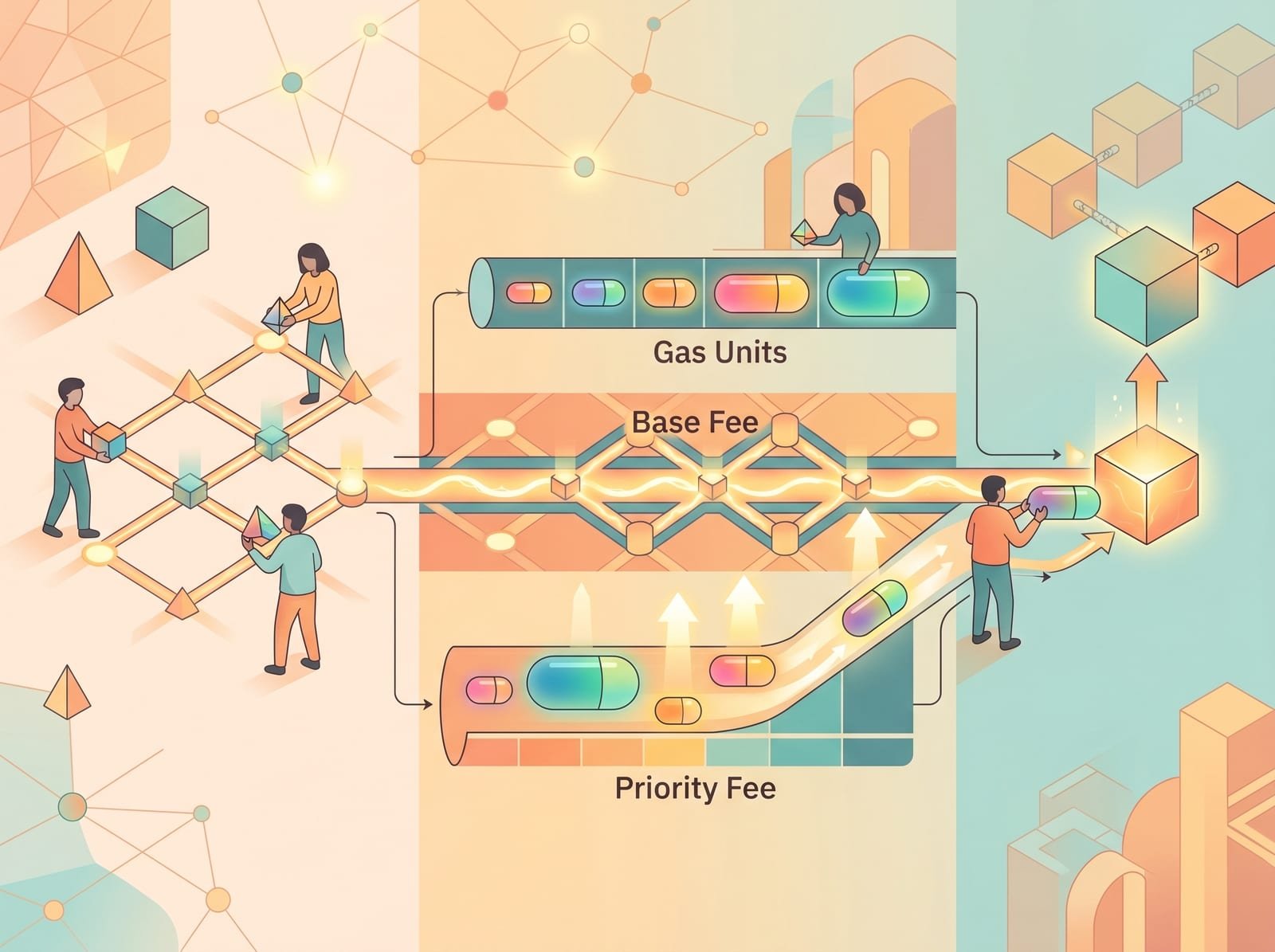
Las tarifas de gas en Ethereum no son fijas; varían en función de la demanda de la red y la complejidad de las transacciones. Las tarifas se miden en gwei, donde un gwei equivale a una milmillonésima parte de un ETH. La fórmula para calcular las tarifas de gas es: Tarifa de gas = Unidades de gas (límite) × (tarifa base + tarifa de prioridad). La tarifa base viene determinada por la demanda de la red, mientras que la tarifa de prioridad actúa como una propina para dar prioridad a tu transacción.
Cada transacción requiere un mínimo de 21 000 unidades de gas. Durante los periodos de alta actividad en la red, la tarifa base aumenta, lo que encarece las transacciones. Los usuarios pueden establecer un límite de gas, que es el máximo que están dispuestos a pagar por una transacción. Si el coste real es inferior, se devuelve la cantidad sobrante.
Aunque las tarifas de gas son inevitables, hay formas de gestionarlas de manera eficaz. Realizar las transacciones en períodos de baja actividad de la red puede ayudar a reducir los costes. Además, algunas carteras digitales ofrecen estimaciones de las tarifas de gas antes de confirmar una transacción, lo que permite a los usuarios ajustar el momento de la transacción o los límites de gas en consecuencia.
De cara al futuro, Ethereum tiene previsto implementar el «sharding», que consiste en dividir la red en partes más pequeñas para gestionar más transacciones simultáneamente. Esta actualización podría reducir significativamente las tarifas de gas al aumentar la capacidad de la red.
Comprender las tarifas de gas de Ethereum es esencial para cualquiera que interactúe con la red. Estas tarifas garantizan que la cadena de bloques se mantenga segura y funcional, pero también pueden fluctuar en función de la demanda. Manteniéndose informados y programando estratégicamente las transacciones, los usuarios pueden gestionar sus tarifas de gas de forma más eficaz.
Esta lección ha sido reescrita por Prison Professors con fines educativos, inspirándose en Binance Academy. El artículo original sigue siendo propiedad de sus autores.
Aviso legal: Este material ha sido elaborado únicamente con fines informativos generales y NO debe: (1) considerarse una recomendación o un consejo individualizado; ni (2) servir de base para ninguna actividad de inversión. Toda la información se proporciona «tal cual» y está sujeta a cambios sin previo aviso; no ofrecemos ninguna garantía de ningún tipo, expresa o implícita, en cuanto a la exactitud, validez, fiabilidad, disponibilidad o integridad de dicha información. Prison Professors Charitable Corporation NO ofrece asesoramiento en materia de inversiones, legal o fiscal de ninguna manera ni forma. La responsabilidad de cualquier decisión de inversión recae exclusivamente en usted, tras analizar todos los posibles factores de riesgo y ejercer su propio criterio independiente. Prison Professors Charitable Corporation no se hace responsable de ninguna consecuencia derivada de ello.
Después de leer esta lección, reflexiona sobre las siguientes preguntas. Escribe al menos de dos a cuatro párrafos para cada pregunta. Puedes utilizar tus respuestas como anotaciones en tu diario o como informes de la lección en tu perfil de Profesores de Prisiones.