Trading
Learn about support and resistance in crypto trading and how they affect market behavior.

Support acts as a price floor, while resistance serves as a price ceiling, influencing market trends.
Support and resistance can be psychological, trendline-based, or moving average-based, each offering different market insights.
Combining multiple indicators strengthens trading signals but requires caution as no method is infallible.
In the realm of cryptocurrency trading, support and resistance levels play a crucial role. These terms describe price points on a chart that often act as barriers to price movement. Although they appear straightforward at first, applying them effectively requires skill due to the ever-changing nature of markets. Understanding these levels is a cornerstone of technical analysis, which involves studying past market data to predict future price trends. Identifying support and resistance can aid traders in determining when to enter or exit trades, managing risks, and making well-informed decisions.
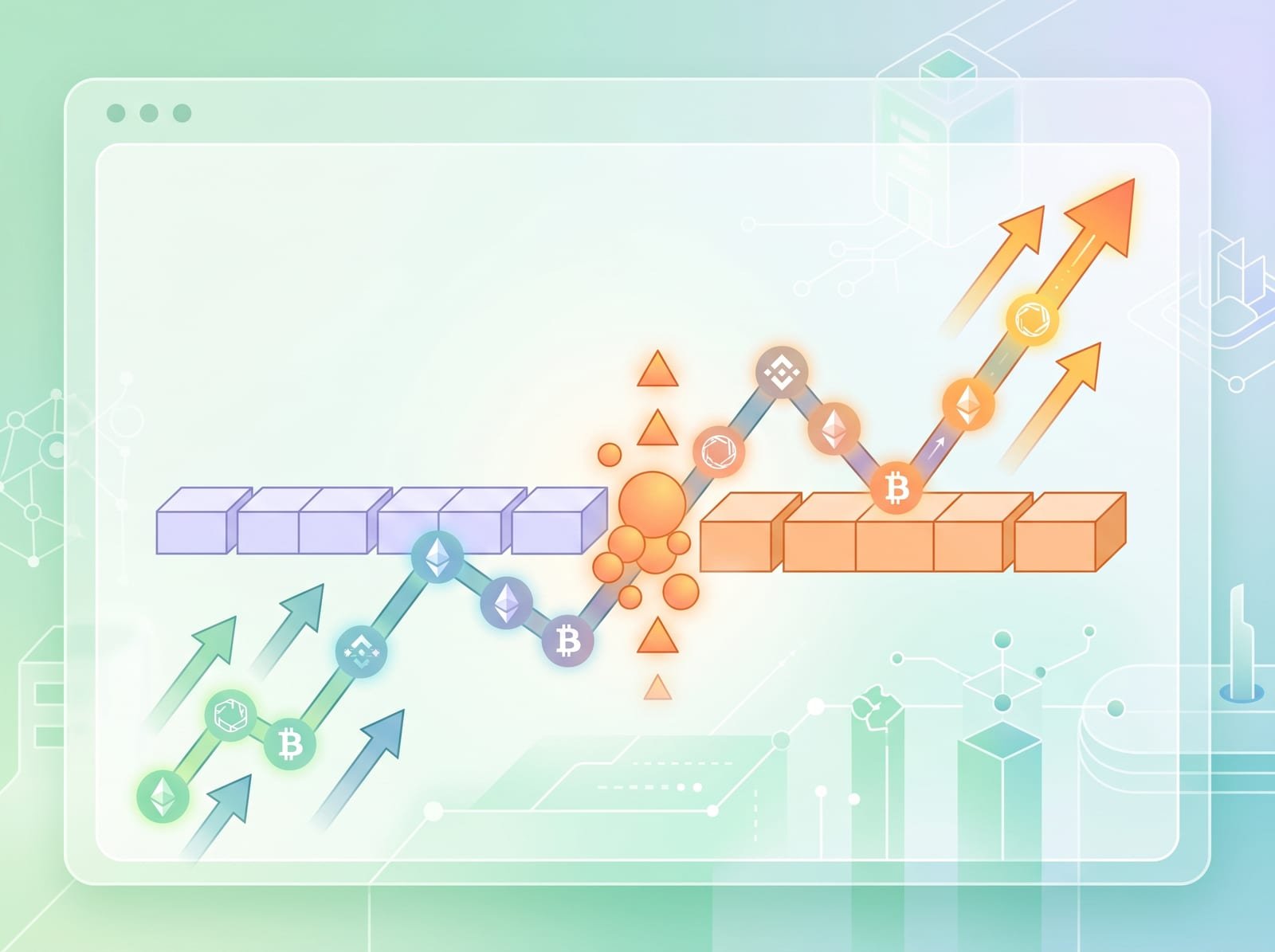
Support acts as a floor where a downward price trend may pause due to increased buying interest. Imagine it as a level where the price struggles to drop further. Conversely, resistance functions as a ceiling where an upward trend might slow down due to selling pressure. Although often depicted as lines, support and resistance are more accurately viewed as zones. This is because market prices can fluctuate around these levels before establishing a clear direction.
Traders utilize support and resistance levels to identify potential reversal points or pauses in price movement. When prices near these levels, two outcomes are possible: prices might bounce back or break through the levels. A breakout can lead to a support-resistance flip, where the roles of the levels reverse. Traders frequently place stop-loss orders around these zones to manage risk, as these orders can limit potential losses if prices move unfavorably.
Support and resistance levels come in various forms, each offering unique insights into market behavior.
These levels occur at round numbers, such as $10, $100, or $1,000. Many traders naturally set their buy or sell orders at these numbers, making them significant points of interest.
Trendlines are diagonal lines on a chart that connect a series of price points. They can serve as support or resistance and indicate the market's overall direction. Recognizing these lines early can be beneficial for predicting future price movements.
Moving averages, which show the average price of an asset over a specific period, can also act as dynamic support or resistance levels. Traders use them to evaluate the market's overall health and spot potential reversal points.

Confluence occurs when multiple indicators or strategies suggest the same market outcome. Support and resistance levels gain strength when they align with other technical signals, like moving averages or past price patterns. For instance, a support zone that coincides with a previous resistance area, a key moving average, and a psychological number is likely more robust. While confluence can enhance trading signals' reliability, it is vital to remember that no strategy is foolproof. Market conditions can change rapidly, so traders must be ready for different outcomes.

Support and resistance are fundamental concepts in cryptocurrency market analysis. By understanding how these levels function and recognizing their types, traders can better navigate the complexities of market behavior. Although these tools offer valuable insights, they should be used in conjunction with other strategies and risk management practices to make informed trading decisions.
This lesson was rewritten by Prison Professors for educational use, inspired by Binance Academy. The original article remains the property of its authors.
Legal disclaimer: This material has been prepared for general informational purposes only and should NOT be: (1) considered an individualized recommendation or advice; and (2) relied upon for any investment activities. All information is provided on an as-is basis and is subject to change without notice, we make no representation or warranty of any kind, express or implied, regarding the accuracy, validity, reliability, availability or completeness of any such information. Prison Professors Charitable Corporation does NOT provide investment, legal, or tax advice in any manner or form. The ownership of any investment decision(s) exclusively vests with you after analyzing all possible risk factors and by exercising your own independent discretion. Prison Professors Charitable Corporation shall not be liable for any consequences thereof.
After reading this lesson, reflect on the following questions. Write at least two to four paragraphs for each prompt. You may use your responses as journal entries or lesson reports on your Prison Professors profile.