
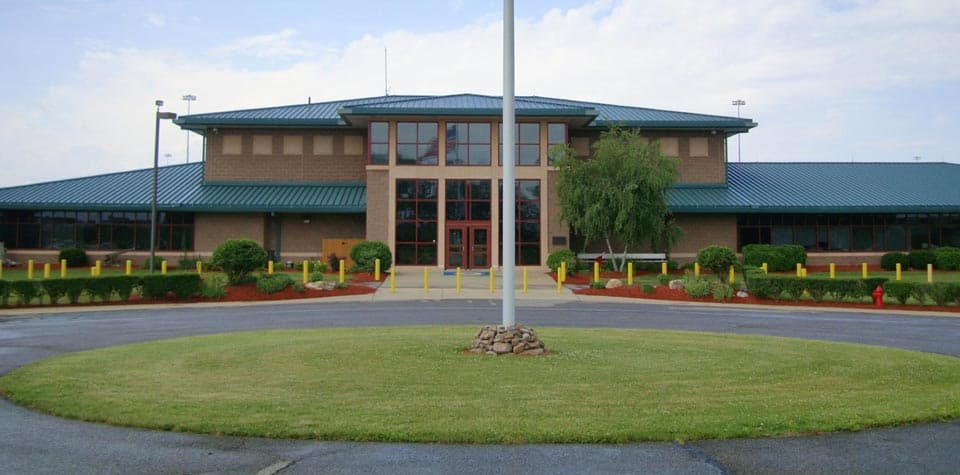
FCI Allenwood Medium
White Deer, PA· NER Region
About FCI Allenwood Medium
FCI Allenwood Medium is a Federal Correctional Institution located in White Deer, Pennsylvania, in Union County. This medium-security facility houses 1,054 male inmates and operates under the Bureau of Prisons Northeast Region. As a medium-security institution, Allenwood Medium serves individuals who require a higher level of security than minimum-security camps but do not need maximum-security placement.
The facility provides standard federal prison programming and services for its inmate population. While FCI Allenwood Medium does not currently offer the Residential Drug Abuse Program (RDAP), inmates have access to other educational, vocational, and rehabilitative programs typical of medium-security federal institutions. The facility maintains standard medical care services to address the healthcare needs of its population.
Families and loved ones can maintain contact with inmates through the facility's visiting program, phone calls, and correspondence. Located in rural Pennsylvania, the facility may require some travel planning for visitors. Prison Professors can help individuals and families prepare for their time at FCI Allenwood Medium by providing guidance on what to expect, how to maintain family connections, and strategies for making the most of available programs and services during incarceration.
Contact & Location
Mailing Address (Inmates)
INMATE NAME & REGISTER NUMBERAllenwood MediumP.O. BOX 2000White Deer, PA 17887Mailing Address (Staff)
Allenwood MediumP.O. BOX 2500White Deer, PA 17887Do NOT send money to an inmate using this facility's address. All funds must be sent to the processing center in Des Moines, Iowa.
Population & Housing
Total population: 1,073
Programs & Education
Program information for this facility is being compiled.
Residential Drug Abuse Program (RDAP)
RDAP Not Available
FCI Allenwood Medium does not currently offer RDAP.
The Residential Drug Abuse Program (RDAP) is the Bureau of Prisons' most intensive substance-abuse treatment program. It is a 500-hour, unit-based program lasting 9 to 12 months, followed by community-based transitional treatment. Participants who successfully complete RDAP may be eligible for up to a 12-month reduction in their sentence under 18 U.S.C. § 3621(e).
Facilities that do not offer RDAP may still provide the Non-Residential Drug Abuse Program (NR-DAP), a less intensive outpatient-style treatment, or the Drug Abuse Education (DAE) course, a shorter psychoeducational program. Both can help demonstrate progress toward rehabilitation but do not qualify for the same sentence reduction as RDAP.
Medical Care
Medical care level information is being compiled.
Standard BOP Medical Services
Inmates request medical attention by submitting a cop-out (Inmate Request to Staff) or a sick call form, typically available in each housing unit. Sick call is held on scheduled mornings — a staff member triages requests and inmates are seen by mid-level providers or physicians based on need.
All BOP facilities provide 24/7 emergency medical coverage. In a medical emergency, staff will initiate on-site treatment and arrange outside hospital transport if necessary. Inmates should notify any staff member immediately for emergencies.
Routine dental exams are provided on an annual basis, including cleanings and necessary X-rays. Emergency dental care — such as treatment for pain, infection, or trauma — is available on a priority basis. Elective procedures are limited and subject to approval.
Each facility has psychology staff who provide individual counseling, group therapy, crisis intervention, and mental health evaluations. Inmates can self-refer by submitting a cop-out to the Psychology Department. Inmates on psychiatric medications are monitored regularly.
Chronic care medications (e.g., blood pressure, insulin, psychiatric meds) are dispensed through a scheduled "pill line." Inmates must report at designated times to receive their medications. Over-the-counter medications are available through commissary; some may be prescribed at no cost.
The BOP charges a $2.00 co-pay for inmate-initiated health care visits. Exemptions apply to follow-up visits requested by medical staff, emergency care, chronic care appointments, mental health contacts, preventive services, and prenatal care. Inmates with insufficient funds are not denied care.
Good to Know
Medical care quality and wait times vary by facility. Inmates with pre-existing conditions should bring documentation of their medical history, current medications, and treating physicians to assist with continuity of care during intake processing.
Have questions about medical care at FCI Allenwood Medium? Share your experience on your Prison Professors profile to help others prepare.
Share Your ExperienceRecreation
Standard BOP recreation information for a medium-security facility. Actual offerings at FCI Allenwood Medium may vary.
Outdoor Recreation
Recreation yards at FCI facilities are enclosed and supervised. Outdoor recreation is available during structured periods — typically mornings, afternoons, and weekends. Men move to the yard during designated call-outs, and the schedule may vary by housing unit.
- Walking and jogging track
- Basketball courts
- Handball/racquetball courts
- Bocce ball
- Horseshoe pits
- Softball field
- Soccer field
Indoor Recreation
Fitness Equipment
- Cable weight machines and resistance equipment
- Stationary bikes and elliptical trainers
- Stair-steppers
Note on free weights: The BOP removed free weights from most federal facilities in the mid-1990s. Today, the vast majority of facilities offer only cable machines, resistance bands, and bodyweight exercise stations — not free weights.
Activities
- Table tennis
- Card and board games
- Pick-up basketball
- Music room (instruments available at some facilities)
Leisure Activities
- Arts and crafts workshops
- Hobby craft programs (leatherwork, painting, drawing, crochet)
- Intramural sports leagues and tournaments
- Holiday and special-event tournaments
- Movie nights (typically weekends)
Library
All federal facilities are required to provide access to a law library so that inmates can research legal matters and prepare court filings. Most facilities also maintain a leisure library with fiction, non-fiction, and reference materials.
- Law library with legal reference materials
- Access to electronic legal research tools
- Leisure library (fiction, non-fiction, self-help)
- Newspapers and magazine subscriptions
- Interlibrary loan requests (at some facilities)
- Typewriter or computer access for legal work
Recreation schedules are posted at each facility and vary by season, staffing levels, and institutional operations. Weekend and holiday schedules often differ from weekday routines. Check with FCI Allenwood Medium's Recreation Department for the current schedule.
Work Assignments & UNICOR
Work Assignments
All medically able inmates at FCI Allenwood Medium are required to work unless participating in a full-time education or vocational training program. Work assignments are made by the Unit Team based on institutional need, the inmate's skills and background, and current program participation.
Work assignments at FCI Allenwood Medium are performed within the facility perimeter.
Common Work Assignments
Standard institutional work assignments pay between $0.12 and $0.40 per hour. Pay grades are determined by position and performance.
Good work performance is factored into program reviews and can positively affect custody classification, housing placement, and eligibility for preferred assignments.
UNICOR (Federal Prison Industries)
UNICOR, also known as Federal Prison Industries (FPI), is a wholly owned government corporation that operates manufacturing and service operations inside federal prisons. UNICOR provides inmates with job training and work experience in real-world industries while producing goods and services for federal agencies.
$0.23 – $1.15 per hour
UNICOR pays significantly more than standard institutional work assignments, making it one of the most sought-after jobs in the federal system.
Products & Services UNICOR May Produce
Application & Waitlist
Inmates must apply for UNICOR positions and there is often a waitlist. Priority is generally given to inmates with court-ordered financial obligations and those nearing release.
Benefits of UNICOR Participation
UNICOR participation is viewed favorably by staff and can positively impact time credits under the First Step Act, custody level reviews, and halfway house recommendations.
UNICOR Availability
Not all federal facilities have UNICOR operations. Contact FCI Allenwood Medium to confirm current UNICOR availability and operations.
First Step Act Time Credits
The First Step Act (FSA) allows eligible inmates to earn time credits toward early release or transfer to supervised release (halfway house or home confinement) through productive work assignments, educational programs, and vocational training.
10 – 15 days of credit per 30 days
Eligible inmates earn 10 days of time credits for every 30 days of successful participation in Evidence-Based Recidivism Reduction (EBRR) programs or productive activities. Inmates assessed as minimum or low risk earn an enhanced rate of 15 days per 30-day period.
Work assignments — including institutional jobs and UNICOR — count as productive activities under the FSA. Combined with program participation, these credits can meaningfully reduce time served. Eligibility depends on factors including offense type, risk assessment score, and disciplinary record.
Commissary
$360.00
Commissary Notes
Over-the-counter medications and postage stamps do not count against the monthly spending limit.
Good to Know
Over-the-counter medications and postage stamps do not count against the monthly spending limit. These items are tracked separately by the Bureau of Prisons.
How to Send Money
Friends and family can deposit funds into an inmate's commissary account through several methods:
- MoneyGram — Available at retail locations nationwide. Use BOP Inmate Deposit code 7932.
- Western Union — Send via online, phone, or in-person. Use BOP city code FBOP, DC.
- U.S. Postal Money Order — Mail to the National Finance Center. Personal checks are not accepted.
- Online via Trust Fund — Use the BOP's authorized deposit service at bop.gov.
All deposits are processed through the Federal Bureau of Prisons' Des Moines Finance Center. Allow 3–5 business days for funds to appear in the inmate's account.
Communication
Staying connected with a loved one at FCI Allenwood Medium is important. The Bureau of Prisons offers several ways for inmates and their families to communicate, including email, telephone, traditional mail, and video visiting. Each method has its own rules, costs, and limitations — here is what you need to know.
TRULINCS Email
TRULINCS (Trust Fund Limited Inmate Computer System) is the BOP's electronic messaging system. It is the primary way inmates at FCI Allenwood Medium send and receive email. Messages are text-only — no attachments, images, or formatted text.
Cost
~$0.05/min
Format
Text only
Inmates purchase email credits (stamps or units) using funds from their commissary account. They are charged per minute of usage while composing or reading messages. Incoming messages from family members are free for the inmate to receive, but the inmate pays to read and reply.
Getting Set Up
- The inmate must add you to their approved contact list from inside the facility — family members cannot initiate the connection.
- Once added, you will receive an email invitation from CorrLinks, the external-facing system that connects to TRULINCS.
- Create a free CorrLinks account at corrlinks.com and accept the inmate's contact request.
Limitations
- Text only — no photos, PDFs, or attachments of any kind
- All messages are monitored and may be read by facility staff
- Contact list must be approved before messaging can begin
- Messages may be delayed during facility lockdowns or system maintenance
Telephone
Inmates at FCI Allenwood Medium can make outgoing phone calls to approved contacts. Calls are placed from designated phones within the housing units during scheduled hours.
300
Minutes / Month
15
Min Per Call
Monitored
& Recorded
- Most inmates receive 300 minutes per month. Inmates on certain disciplinary statuses may have reduced allotments.
- Each call is limited to approximately 15 minutes. A warning tone sounds before the call disconnects.
- All calls are monitored and recorded except those designated as attorney-client privileged communications.
- Inmates use their commissary account balance to pay for calls. Families can also set up prepaid phone accounts through the BOP's approved telephone provider to reduce per-minute costs.
- International calls are available but cost significantly more than domestic calls.
Tip for Families
Setting up a prepaid account in advance ensures your loved one can call you as soon as they arrive at the facility. Contact the BOP's telephone provider to establish an account using the inmate's register number.
Traditional mail remains one of the most reliable ways to stay in touch with someone at FCI Allenwood Medium. All correspondence must include the inmate's full legal name and register number on the envelope and letter.
Inmate Mailing Address
INMATE FULL NAME, REGISTER NUMBERP.O. BOX 2000White Deer, PA 17887What You Can Send
- Letters and cards
- Photographs (standard prints — no Polaroids or instant photos)
- Newspaper and magazine clippings
- Books and magazines sent directly from the publisher or an approved vendor (Amazon, Barnes & Noble, etc.)
- Religious materials
What You Cannot Send
- Packages (unless pre-approved by staff)
- Cash, checks, or money orders to the facility
- Stamps or stamped envelopes
- Stickers, glitter, or glued items
- Crayon or marker drawings
- Perfumed or scented paper
Important
All incoming and outgoing mail is inspected by facility staff. Mail that violates BOP policy will be rejected and returned to the sender. Always include a return address on your envelope.
Video Visiting
The Bureau of Prisons has rolled out video visiting capabilities at many federal facilities, including institutions like FCI Allenwood Medium. Video visits allow families to see and speak with their loved one face-to-face without traveling to the facility.
- Conducted through facility-issued tablets or designated video visiting stations within the housing unit.
- Must be scheduled in advance through the BOP's approved scheduling system.
- Subject to institutional availability — sessions may be limited during lockdowns, counts, or high-demand periods.
- Visitors must be on the inmate's approved visiting list to participate in video visits.
- Video visits are monitored and recorded, similar to phone calls.
Availability Note
Video visiting availability varies by facility and may change based on institutional needs. Contact FCI Allenwood Medium directly to confirm whether video visiting is currently offered and how to schedule a session.
Stories from FCI Allenwood Medium
No journal entries yet from FCI Allenwood Medium. Have you been here? Start your profile and share your experience.
Create Your ProfileFrequently Asked Questions
Have more questions about FCI Allenwood Medium? Contact us and we'll do our best to help.
Take the Next Step
Prepare for Success—Starting Today
Whether you or a loved one is heading to FCI Allenwood Medium, the right preparation can change everything. These free tools will help.
Start Your Free Profile
Build a release plan, track milestones, and show decision-makers you're prepared.
Explore Free Resources
Self-paced courses on reentry, sentence reduction, and building a strong record.
Federal Sentence Calculator
Estimate good-time credit, projected release dates, and halfway-house eligibility.
Join our newsletter for weekly tips on sentence reduction, reentry, and advocacy.