Basic Education on Crypto
Descubra cómo funcionan las apuestas criptográficas y explore sus posibles ventajas y riesgos.

La estaca consiste en mantener criptomonedas para respaldar las operaciones de la cadena de bloques y obtener recompensas.
Un mecanismo de consenso que utiliza activos apostados para seleccionar validadores y que requiere menos energía que Proof-of-Work.
Sea consciente de los riesgos, incluida la volatilidad de los precios y los posibles periodos de bloqueo de sus activos.
El staking de criptomonedas es una forma en que los particulares pueden obtener recompensas mientras ayudan a respaldar una red blockchain. Al mantener activos digitales en un monedero de criptomonedas, puedes participar en las operaciones de la red. Cuando haces staking con tu criptomoneda, comprometes tus activos con la red, contribuyendo a la validación de transacciones y a la gobernanza de la red. A cambio, puedes recibir recompensas, a menudo en forma de criptomonedas adicionales.
Piensa en el staking como algo similar a ganar intereses en una cuenta de ahorro. Se te recompensa por tu participación, lo que también refuerza la seguridad y la funcionalidad de la red.
El staking consiste en comprometer tu criptomoneda con una red blockchain. A continuación, la red selecciona validadores entre aquellos que han apostado sus activos. Los validadores son responsables de confirmar las transacciones, y cuanto más apuestes, mayores serán tus posibilidades de ser elegido como validador.
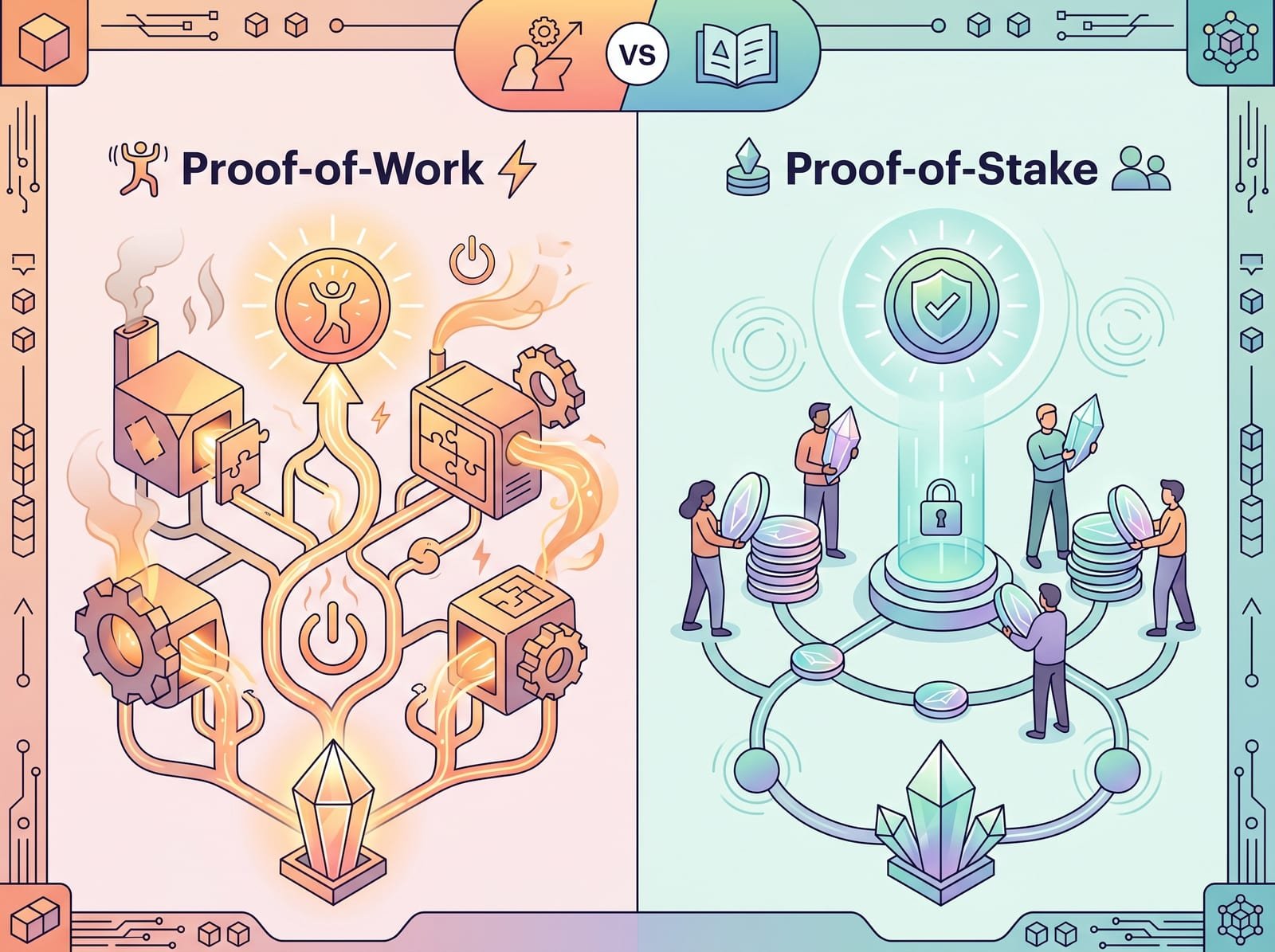
Este proceso forma parte del mecanismo de consenso de Prueba de Participación (PoS). A diferencia del sistema de Prueba de Trabajo (PoW), que requiere resolver problemas complejos y consumir una cantidad significativa de energía, el PoS es más eficiente desde el punto de vista energético y más accesible. Esto facilita la participación de personas que no disponen de recursos técnicos avanzados.
El modelo de Prueba de Trabajo, utilizado por Bitcoin, implica que los mineros resuelvan problemas matemáticos complejos para añadir nuevos bloques a la cadena de bloques. Este proceso requiere mucha potencia de cálculo y electricidad. Por el contrario, la Prueba de Participación selecciona a los validadores en función de la cantidad de criptomoneda que hayan apostado, lo que lo hace menos intensivo en recursos y más inclusivo.
Al comprender estas diferencias, se pueden apreciar mejor las ventajas y los inconvenientes de cada sistema.
El staking de criptomonedas ofrece varias ventajas potenciales. Una de las principales es la oportunidad de obtener recompensas por tus activos sin necesidad de realizar operaciones activas. Esto puede proporcionar una fuente estable de ingresos pasivos.

El staking también es más respetuoso con el medio ambiente que la minería, ya que consume menos electricidad. Además, algunos proyectos de blockchain otorgan derechos de voto a los stakers, lo que les permite tener voz en la dirección futura del proyecto.
Aunque el staking puede ser gratificante, es importante ser consciente de los riesgos. Los precios de las criptomonedas son volátiles, y una caída en el valor podría contrarrestar cualquier recompensa obtenida por el staking. Además, algunos acuerdos de staking requieren que bloquees tus activos durante un periodo determinado, lo que limita tu acceso a los fondos.
Investiga siempre los requisitos específicos del proyecto de cadena de bloques y la plataforma con la que decidas hacer staking. Esto incluye conocer las cantidades mínimas de staking y las comisiones asociadas. Estar informado puede ayudarte a tomar mejores decisiones.
Antes de empezar a hacer staking, es fundamental tener una estrategia. Decide cuánto quieres apostar, durante cuánto tiempo y qué esperas conseguir, ya sea obtener recompensas, ganar derechos de voto o contribuir a la seguridad de la red.

Elige la criptomoneda adecuada para tus necesidades, ya que no todas ofrecen staking. Considera diversificar tu staking entre diferentes monedas para reducir el riesgo. Por último, asegúrate de tener un monedero de criptomonedas seguro. Los monederos calientes están conectados a Internet y son convenientes para transacciones frecuentes, mientras que los monederos fríos almacenan los activos sin conexión y ofrecen mayor seguridad.
Esta lección ha sido reescrita por Prison Professors con fines educativos, inspirándose en Binance Academy. El artículo original sigue siendo propiedad de sus autores.
Aviso legal: Este material se ha elaborado únicamente con fines informativos generales y NO debe: (1) considerarse una recomendación o un consejo individualizado; ni (2) servir de base para ninguna actividad de inversión. Toda la información se proporciona «tal cual» y está sujeta a cambios sin previo aviso; no ofrecemos ninguna garantía de ningún tipo, expresa o implícita, en cuanto a la exactitud, validez, fiabilidad, disponibilidad o integridad de dicha información. Prison Professors Charitable Corporation NO ofrece asesoramiento en materia de inversiones, legal o fiscal de ninguna manera ni forma. La responsabilidad de cualquier decisión de inversión recae exclusivamente en usted, tras analizar todos los posibles factores de riesgo y ejercer su propio criterio independiente. Prison Professors Charitable Corporation no se hace responsable de ninguna consecuencia derivada de ello.
Después de leer esta lección, reflexiona sobre las siguientes preguntas. Escribe al menos de dos a cuatro párrafos para cada pregunta. Puedes utilizar tus respuestas como anotaciones en tu diario o como informes de la lección en tu perfil de Profesores de Prisiones.