Basic Education on Crypto
Aprenda cómo la criptoeconomía apoya las redes descentralizadas garantizando la confianza y la cooperación.

La criptoeconomía combina criptografía y economía para gestionar redes descentralizadas sin autoridad central.
Ilustra el reto de lograr el consenso en sistemas descentralizados y cómo los incentivos pueden garantizar un comportamiento honesto.
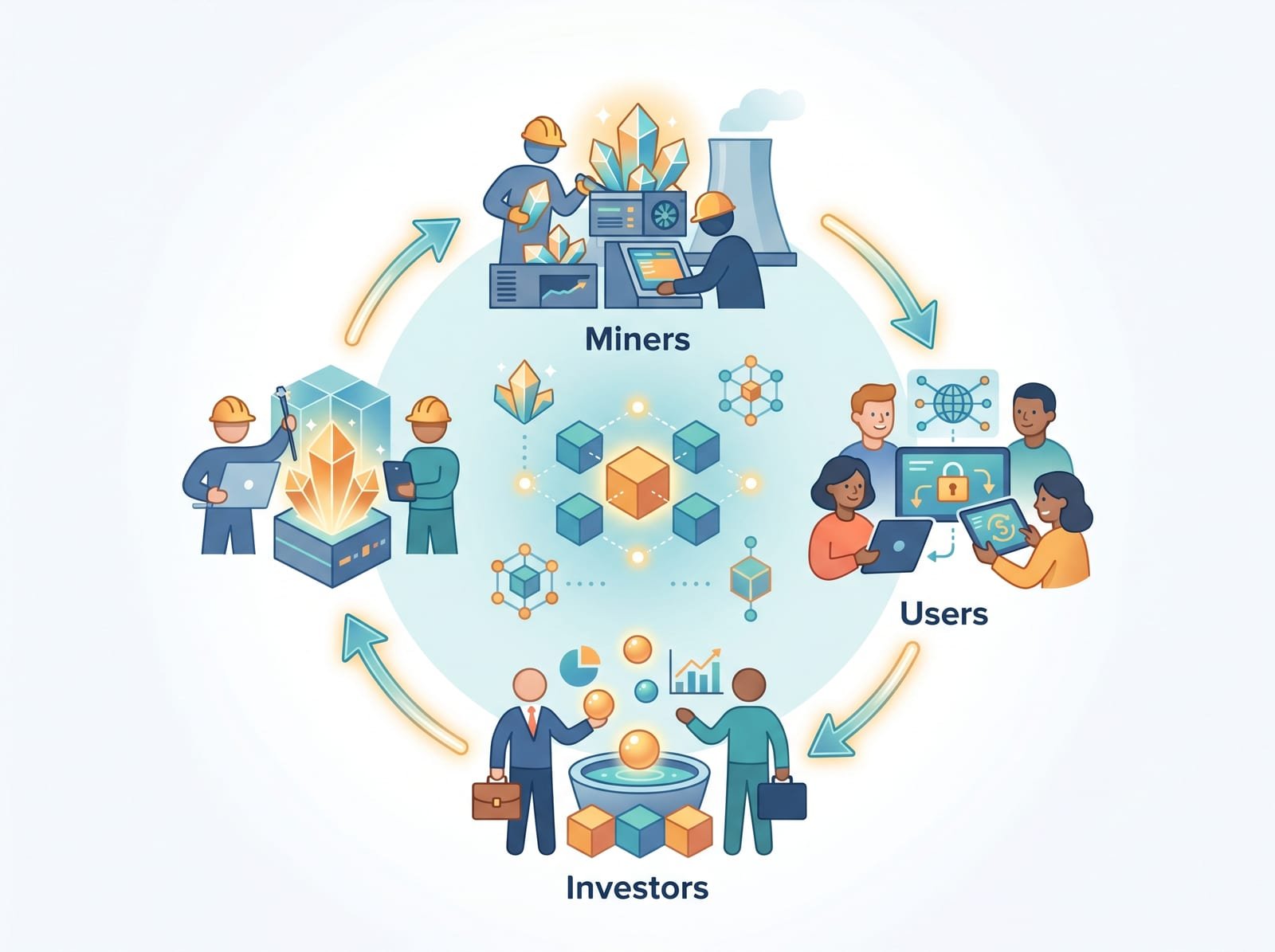
Describe la interacción entre mineros, usuarios e inversores que mantiene operativas las redes descentralizadas.
Muestra cómo Bitcoin utiliza la prueba de trabajo para mantener la integridad de las transacciones e incentivar a los mineros.
La concienciación sobre posibles ataques como la colusión y los ataques Sybil es crucial para la seguridad de la red.
La criptoeconomía es un campo fascinante que fusiona la criptografía, la economía y la informática para explorar el funcionamiento de las redes descentralizadas. Estas redes operan sin una autoridad central, lo que permite a personas de todo el mundo colaborar y tomar decisiones de forma conjunta. Este sistema es especialmente importante en los ámbitos de las criptomonedas y la tecnología blockchain, donde es esencial mantener la confianza y la coordinación sin depender de un único líder. Al comprender la criptoeconomía, podrás apreciar cómo estos sistemas garantizan su integridad y eficacia.
El problema de los generales bizantinos es un ejemplo clásico que pone de relieve las dificultades para alcanzar un consenso en una red descentralizada. Imagina a varios generales del ejército que deben ponerse de acuerdo sobre una estrategia, como si atacar o retirarse. Sus comunicaciones podrían sufrir retrasos, ser interceptadas o manipuladas, lo que dificulta la coordinación. Para tener éxito, todos los generales deben acordar el mismo plan. Este problema es paralelo a los retos a los que se enfrentan las redes descentralizadas, donde es necesario generar confianza entre participantes que quizá no se conozcan entre sí. La criptoeconomía aborda estos retos creando incentivos para el comportamiento honesto y desalentando el engaño.

Joel Monegro introdujo el Círculo Criptoeconómico para describir cómo fluye el valor en los ecosistemas descentralizados. Este modelo cuenta con tres participantes principales: mineros, usuarios e inversores. Los mineros proporcionan los recursos digitales necesarios, los usuarios consumen estos recursos y los inversores aportan el capital necesario para mantener la red. La interacción entre estos grupos ayuda a mantener la red funcional y rentable. Comprender estas relaciones es clave para entender cómo operan las redes descentralizadas y mantienen su valor.
Bitcoin, la primera criptomoneda, muestra cómo funciona la criptoeconomía en la práctica. Utiliza un algoritmo de consenso conocido como «prueba de trabajo» para resolver el problema del doble gasto, garantizando que las transacciones se registren con precisión en la cadena de bloques. Los mineros validan las transacciones resolviendo complejos rompecabezas matemáticos, asegurando la red a cambio de nuevos bitcoins y comisiones por transacción. Los usuarios e inversores ayudan a mantener la demanda y aportan liquidez, lo cual es vital para que los mineros cubran sus costes. A medida que Bitcoin se acerca a su suministro máximo de 21 millones de monedas, la red depende cada vez más de las comisiones de transacción de los usuarios para recompensar a los mineros, lo que ilustra la naturaleza dinámica de la criptoeconomía.

Aunque la criptoeconomía ofrece un marco sólido para las redes descentralizadas, siguen existiendo vulnerabilidades. Uno de estos riesgos es el ataque de colusión, en el que los participantes podrían conspirar para controlar la red, comprometiendo su naturaleza descentralizada. Otra amenaza es el ataque Sybil, en el que un atacante crea numerosas identidades falsas para manipular el sistema. Comprender estos ataques es crucial para cualquiera que interactúe con aplicaciones descentralizadas, ya que subraya la necesidad de una vigilancia constante y de mejoras en la seguridad de la red.
Esta lección ha sido reescrita por Prison Professors con fines educativos, inspirándose en Binance Academy. El artículo original sigue siendo propiedad de sus autores.
Aviso legal: Este material ha sido elaborado únicamente con fines informativos generales y NO debe: (1) considerarse una recomendación o un consejo individualizado; ni (2) servir de base para ninguna actividad de inversión. Toda la información se proporciona «tal cual» y está sujeta a cambios sin previo aviso; no ofrecemos ninguna garantía de ningún tipo, expresa o implícita, en cuanto a la exactitud, validez, fiabilidad, disponibilidad o integridad de dicha información. Prison Professors Charitable Corporation NO proporciona asesoramiento de inversión, jurídico o fiscal de ninguna manera ni forma. La responsabilidad de cualquier decisión de inversión recae exclusivamente en usted, tras analizar todos los posibles factores de riesgo y ejercer su propio criterio independiente. Prison Professors Charitable Corporation no se hace responsable de ninguna consecuencia derivada de ello.
Después de leer esta lección, reflexiona sobre las siguientes preguntas. Escribe al menos de dos a cuatro párrafos para cada pregunta. Puedes utilizar tus respuestas como anotaciones en tu diario o como informes de la lección en tu perfil de Profesores de Prisiones.