Basic Education on Crypto
Learn about smart contracts, their functionality, benefits, and challenges in blockchain technology.

Smart contracts use 'if/when...then' statements to automate actions when specific conditions are met.
Blockchain technology ensures secure, immutable records, providing trust without intermediaries.
While smart contracts offer efficiency and cost savings, they also face challenges like immutability and coding vulnerabilities.
Smart contracts are a revolutionary concept in the world of blockchain technology. These are software programs that automatically enforce and execute agreements without needing a third party. Unlike traditional contracts, which require manual oversight, smart contracts operate on the blockchain, a decentralized network that guarantees all terms are fulfilled precisely. This allows for automation of agreements in various sectors, including finance, supply chain management, and government processes, with a significant presence in cryptocurrency.
This lesson will delve into what smart contracts are, how they function, and their advantages and limitations.
The idea of smart contracts was introduced in 1994 by computer scientist Nick Szabo. He compared them to vending machines, which automatically deliver a product when the correct amount of money is inserted. Similarly, smart contracts use "if/when...then" logic to execute actions once specific conditions are met. For instance, a smart contract might dictate that once a payment is received, a digital asset is transferred to the payer.

This automation removes the need for trust between parties, as the contract itself ensures that agreed-upon actions occur automatically.
Understanding smart contracts requires a basic knowledge of blockchain technology. Blockchain is a decentralized digital ledger that records transactions across a network of computers. Transactions are grouped into "blocks," which are then linked together in a "chain." This structure makes it nearly impossible to alter a block without affecting the entire chain, ensuring security and reliability.

Smart contracts rely on this decentralized network to function without intermediaries, as the blockchain itself verifies and records each transaction.
Smart contracts provide several advantages:
These benefits make smart contracts particularly appealing in the realm of cryptocurrency, facilitating seamless and reliable digital transactions.
Despite their advantages, smart contracts have limitations. A significant challenge is their immutability; once deployed, they cannot be changed. This can be problematic if the terms need updating or correcting. Additionally, while blockchain is secure, smart contracts are software programs that can have vulnerabilities if not properly coded. Poorly written contracts can be exploited by malicious actors.
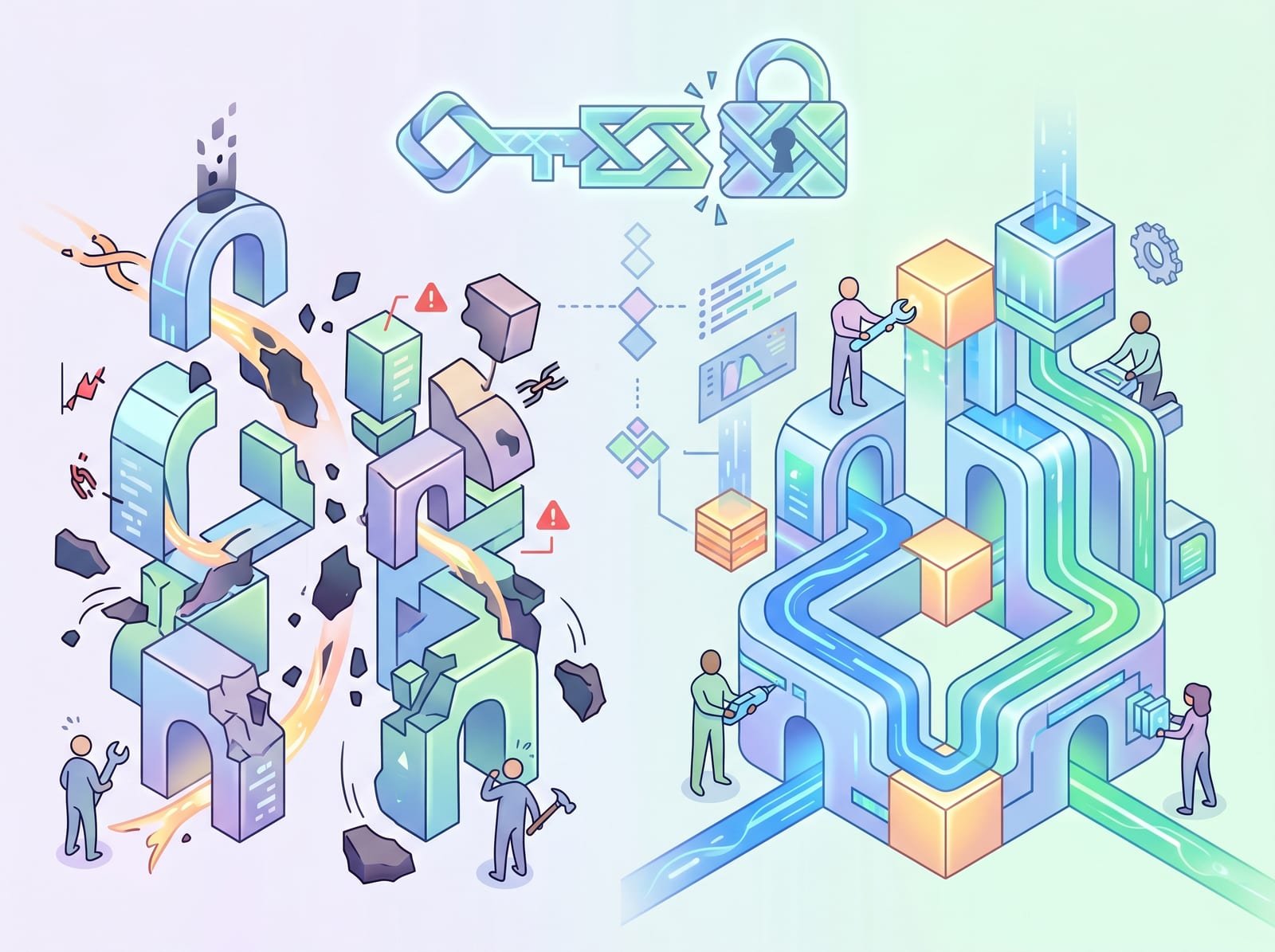
Moreover, smart contracts are not intelligent in the human sense—they cannot interpret nuances or subjective terms. They work best in situations where conditions and actions are clearly defined and objective.
Smart contracts represent a significant advancement in executing agreements, offering automation, security, and efficiency. However, like any technology, they have challenges. Understanding how they work, along with their benefits and drawbacks, is crucial for anyone interested in digital transactions and blockchain technology. As you prepare for life after release, knowledge of smart contracts could prove valuable in navigating the evolving digital finance landscape.
This lesson was rewritten by Prison Professors for educational use, inspired by Binance Academy. The original article remains the property of its authors.
Legal disclaimer: This material has been prepared for general informational purposes only and should NOT be: (1) considered an individualized recommendation or advice; and (2) relied upon for any investment activities. All information is provided on an as-is basis and is subject to change without notice, we make no representation or warranty of any kind, express or implied, regarding the accuracy, validity, reliability, availability or completeness of any such information. Prison Professors Charitable Corporation does NOT provide investment, legal, or tax advice in any manner or form. The ownership of any investment decision(s) exclusively vests with you after analyzing all possible risk factors and by exercising your own independent discretion. Prison Professors Charitable Corporation shall not be liable for any consequences thereof.
After reading this lesson, reflect on the following questions. Write at least two to four paragraphs for each prompt. You may use your responses as journal entries or lesson reports on your Prison Professors profile.