Basic Education on Crypto
Comprender la relación riesgo/recompensa para tomar decisiones de negociación con conocimiento de causa y gestionar los riesgos con eficacia.

La relación riesgo/recompensa ayuda a los operadores a evaluar las posibles ganancias frente a las posibles pérdidas, orientando la toma de decisiones con conocimiento de causa.
Para calcular la relación riesgo/recompensa, identifique el punto de entrada, el objetivo de beneficio y el stop-loss y, a continuación, divida la pérdida potencial entre la ganancia potencial.
Los operadores buscan situaciones en las que la recompensa supere con creces el riesgo, lo que se conoce como oportunidades asimétricas.
Una relación riesgo/recompensa favorable puede conducir a la rentabilidad incluso con una tasa de ganancias más baja, haciendo hincapié en la selección estratégica de operaciones.
A la hora de realizar operaciones, ya sea con criptomonedas o en otros mercados financieros, es fundamental comprender cómo equilibrar el riesgo y la rentabilidad. La relación riesgo/rentabilidad es una herramienta que ayuda a los operadores a determinar cuánto podrían ganar en comparación con lo que podrían perder en una operación. Este concepto es crucial para tomar decisiones informadas y gestionar el riesgo de forma eficaz.
La relación riesgo/recompensa es un aspecto fundamental del trading que puede servirte de guía a la hora de evaluar los posibles resultados de tus operaciones. Al comprender esta relación, podrás proteger mejor tus inversiones y aspirar a un éxito constante.
La relación riesgo/recompensa es un cálculo que compara el beneficio potencial de una operación con la posible pérdida. Normalmente se expresa como una relación, por ejemplo, 1:3, lo que significa que por cada unidad de riesgo asumida, el operador espera obtener tres unidades de recompensa. Esta relación ayuda a los operadores a decidir si una operación merece la pena el riesgo que conlleva.
Para calcular esta relación, debe identificar tres puntos clave: su punto de entrada, su objetivo de ganancias (el punto en el que saldría con beneficios) y su punto de stop-loss (el punto en el que saldría para evitar más pérdidas). Al dividir la pérdida potencial entre la ganancia potencial, se obtiene la relación. Una relación más baja sugiere una mayor recompensa por cada unidad de riesgo.

Veamos un ejemplo práctico. Supongamos que está considerando comprar Bitcoin. Tras analizar el mercado, establece un objetivo de ganancias un 15 % por encima de su precio de entrada y un stop-loss con una pérdida del 5 %. Su ratio riesgo/recompensa sería de 5:15, lo que se simplifica a 1:3. Esto indica que por cada dólar que arriesga, podría ganar potencialmente tres dólares.
Es importante tomar estas decisiones basándose en un análisis cuidadoso y no en números aleatorios. Herramientas como los indicadores técnicos pueden ayudar a determinar objetivos de beneficio y puntos de stop-loss realistas, mejorando tu proceso de toma de decisiones.
Los traders suelen buscar configuraciones en las que la recompensa potencial supere significativamente al riesgo. Esto se denomina búsqueda de oportunidades asimétricas, en las que el potencial al alza es mucho mayor que el a la baja. Por ejemplo, una configuración de operación con una relación riesgo/recompensa de 1:4 sugiere que la ganancia posible es cuatro veces mayor que la pérdida potencial, lo que la hace más atractiva.
Otro factor a tener en cuenta es la tasa de acierto, que es el porcentaje de operaciones exitosas respecto al total de operaciones realizadas. Incluso con una tasa de acierto más baja, un operador puede obtener beneficios si elige de forma sistemática operaciones con relaciones riesgo/recompensa favorables. Por ejemplo, un operador con una relación riesgo/recompensa de 1:10 solo necesita acertar una de cada diez operaciones para alcanzar el umbral de rentabilidad.
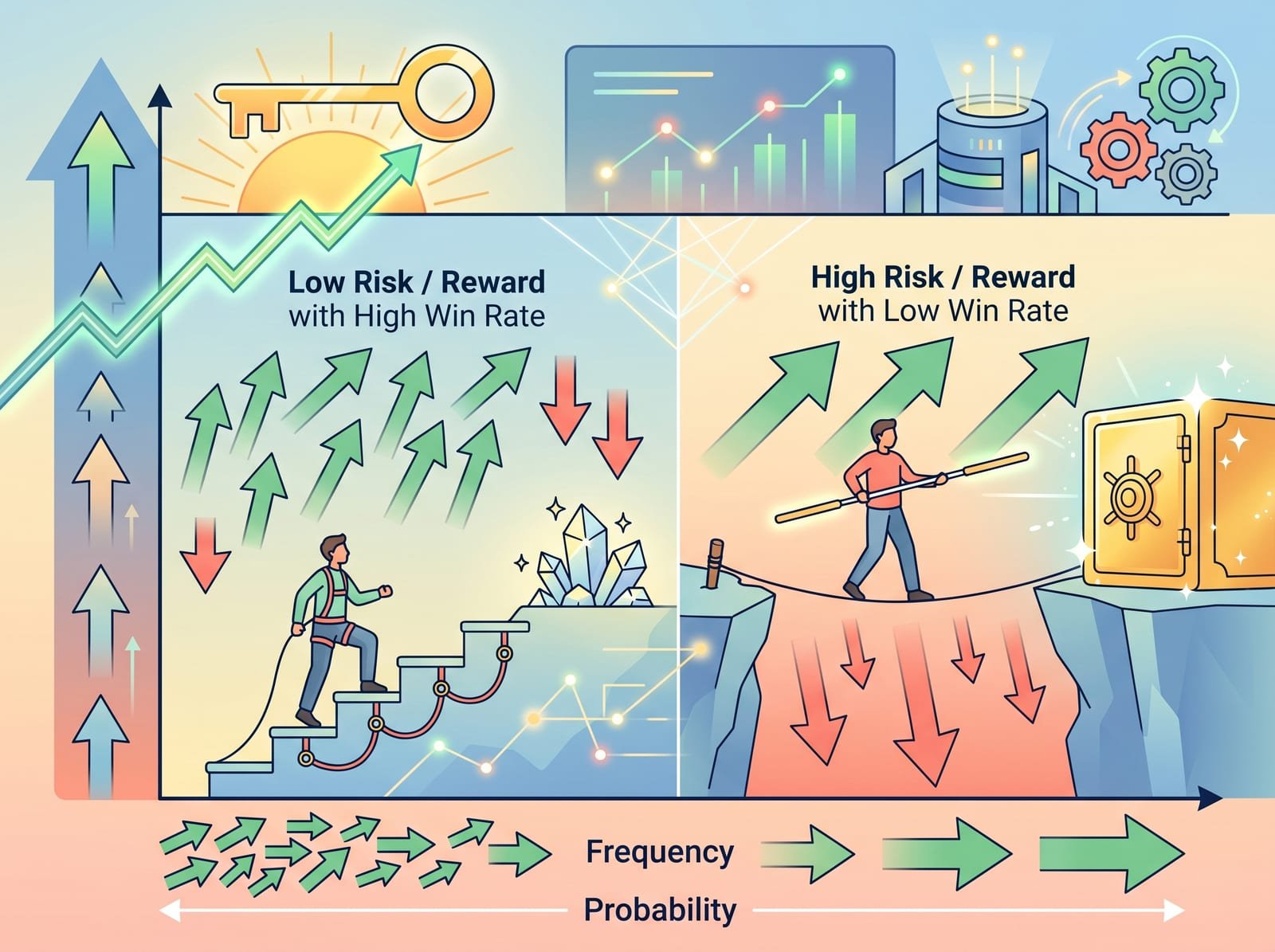
El concepto de equilibrar riesgo y recompensa no se limita al trading. Imagina que te ofrecen un trabajo que requiere un esfuerzo y un riesgo significativos, pero que promete grandes recompensas. Por otro lado, otro trabajo podría ofrecer recompensas moderadas con un riesgo mínimo. Evaluar estas opciones implica sopesar los beneficios potenciales frente a las posibles desventajas, de forma muy similar a como los traders evalúan las operaciones.
Tanto en el trading como en la vida, comprender este equilibrio ayuda a tomar decisiones que se ajusten a tus objetivos y a tu tolerancia al riesgo. Esta perspectiva es valiosa no solo para gestionar inversiones, sino también para la toma de decisiones cotidianas.
La relación riesgo/recompensa es una herramienta fundamental para cualquiera que se dedique al trading. Ofrece un enfoque estructurado para evaluar los resultados potenciales de una operación y tomar decisiones basadas en principios sólidos de gestión del riesgo. Al incorporar esta relación en tus planes de trading, puedes proteger mejor tus inversiones y aspirar a una rentabilidad constante.
Recuerda que el trading conlleva riesgos, y es esencial mantenerse informado y actuar con cautela a la hora de tomar decisiones. Llevar un diario de trading para documentar tus operaciones puede ayudarte a evaluar estrategias y adaptarte a las condiciones cambiantes del mercado.
Esta lección ha sido reescrita por Prison Professors con fines educativos, inspirándose en Binance Academy. El artículo original sigue siendo propiedad de sus autores.
Aviso legal: Este material se ha elaborado únicamente con fines informativos generales y NO debe: (1) considerarse una recomendación o un consejo individualizado; ni (2) servir de base para ninguna actividad de inversión. Toda la información se proporciona «tal cual» y está sujeta a cambios sin previo aviso; no ofrecemos ninguna garantía de ningún tipo, expresa o implícita, en cuanto a la exactitud, validez, fiabilidad, disponibilidad o integridad de dicha información. Prison Professors Charitable Corporation NO proporciona asesoramiento de inversión, jurídico o fiscal de ninguna manera ni forma. La responsabilidad de cualquier decisión de inversión recae exclusivamente en usted, tras analizar todos los posibles factores de riesgo y ejercer su propio criterio independiente. Prison Professors Charitable Corporation no se hace responsable de ninguna consecuencia derivada de ello.
Después de leer esta lección, reflexiona sobre las siguientes preguntas. Escribe al menos de dos a cuatro párrafos para cada pregunta. Puedes utilizar tus respuestas como anotaciones en tu diario o como informes de la lección en tu perfil de Profesores de Prisiones.