Security
Understand and avoid common cryptocurrency scams like giveaways and phishing.

Scammers promise free money in exchange for sending cryptocurrency but never deliver on their promises.
Fraudsters pose as customer support to steal personal information and access accounts.
These scams promise high returns with little risk and often use new investments to pay off earlier investors.
Cryptocurrencies offer exciting opportunities for new forms of finance, but they also come with certain risks. One of the most significant risks is the potential for scams. By understanding how these scams operate, you can better protect yourself and your assets. This lesson explores three common types of scams in the crypto world: giveaway scams, technical support scams, and get-rich-quick schemes.
Giveaway scams are a popular method used by fraudsters to deceive individuals into sending cryptocurrency. These scams typically promise free money, suggesting that if you send a certain amount of cryptocurrency, you will receive double or triple in return. Unfortunately, once your cryptocurrency leaves your wallet, it is unlikely to return.
Scammers often impersonate trusted figures, such as celebrities, to gain credibility. They might hack into verified accounts or create fake profiles that closely resemble legitimate ones. This often occurs on platforms like social media, where scammers use live streams or posts to promote their fraudulent giveaways.
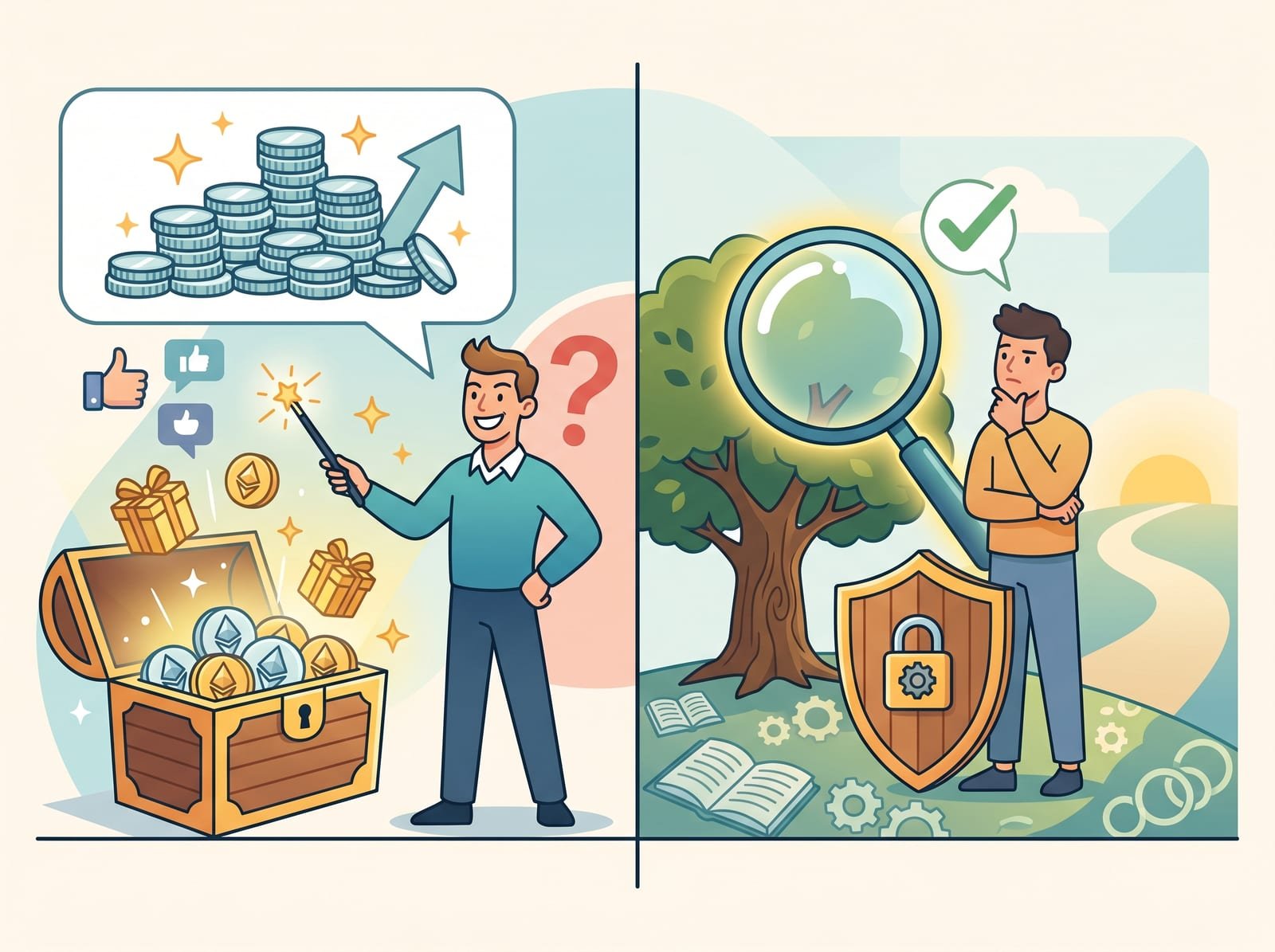
To protect yourself, never send cryptocurrency to strangers, regardless of how enticing the offer. If you suspect a scam, report the account to help prevent others from becoming victims.
In technical support scams, fraudsters pose as customer support from a cryptocurrency platform. They often claim that your account has been compromised and request personal information, like usernames and passwords, to resolve the issue. This is a phishing attempt to gain access to your account and funds.
These scams can be convincing, as scammers replicate legitimate services. To safeguard against this, always verify the source of any communication. Never share your account details, and use two-factor authentication (2FA) for added security. If you're uncertain about any messages you receive, contact the official support channels directly.

Get-rich-quick schemes exploit the desire for fast profits. These include pyramid schemes, Ponzi schemes, and fraudulent investment opportunities. In these scams, fraudsters promise high returns with little risk, often using new investments to pay off earlier investors.
Initial Coin Offerings (ICOs) are a common target for investment scams. While legitimate ICOs exist, scammers exploit the excitement around new projects. It's crucial to research any investment opportunity thoroughly. Look into the project's founders, history, and feasibility before committing any funds.

Be wary of any promises of guaranteed returns, especially those claiming unrealistic gains. If an offer seems too good to be true, it likely is.
Staying informed is your best defense against cryptocurrency scams. Always approach offers that seem too good to be true with skepticism. By understanding common scam tactics, you can better protect your assets and navigate the cryptocurrency world more safely.
This lesson was rewritten by Prison Professors for educational use, inspired by Binance Academy. The original article remains the property of its authors.
Legal disclaimer: This material has been prepared for general informational purposes only and should NOT be: (1) considered an individualized recommendation or advice; and (2) relied upon for any investment activities. All information is provided on an as-is basis and is subject to change without notice, we make no representation or warranty of any kind, express or implied, regarding the accuracy, validity, reliability, availability or completeness of any such information. Prison Professors Charitable Corporation does NOT provide investment, legal, or tax advice in any manner or form. The ownership of any investment decision(s) exclusively vests with you after analyzing all possible risk factors and by exercising your own independent discretion. Prison Professors Charitable Corporation shall not be liable for any consequences thereof.
After reading this lesson, reflect on the following questions. Write at least two to four paragraphs for each prompt. You may use your responses as journal entries or lesson reports on your Prison Professors profile.