Security
Explore the types of crypto wallets and essential security measures for safeguarding your digital assets.

Crypto wallets store private keys essential for accessing digital currencies.
Implementing strong security measures can help protect your digital assets from theft.
Private keys are unique codes that allow you to authorize cryptocurrency transactions.
A crypto wallet is a tool that helps you manage your cryptocurrencies by storing your private keys. These keys are like secret passwords that give you access to your digital funds recorded on a blockchain. Without your private keys, you can't access or use your cryptocurrencies. Therefore, keeping these keys safe is crucial for managing your digital assets effectively.
Crypto wallets can be categorized into two main types: software wallets and hardware wallets. Each type has unique features and serves different needs.
Software wallets are applications that you can install on your computer or mobile device. They store your private keys digitally and are accessible when you're connected to the internet. These wallets are often free and convenient, but they are more vulnerable to hacking attempts compared to hardware wallets.

Hardware wallets are physical devices resembling USB drives that store your private keys offline. This makes them less susceptible to online attacks, providing enhanced security. Although they tend to be more expensive, they offer a higher level of protection for your digital assets.
Another important distinction is between custodial and non-custodial wallets. Custodial wallets are managed by a third party, which means you trust them to keep your private keys safe. This can be convenient but may limit your control over your crypto. Non-custodial wallets, however, give you full control over your private keys and assets, though you bear the sole responsibility for their security.

Setting up a crypto wallet varies depending on the type you choose. Here’s a general guide to help you get started.
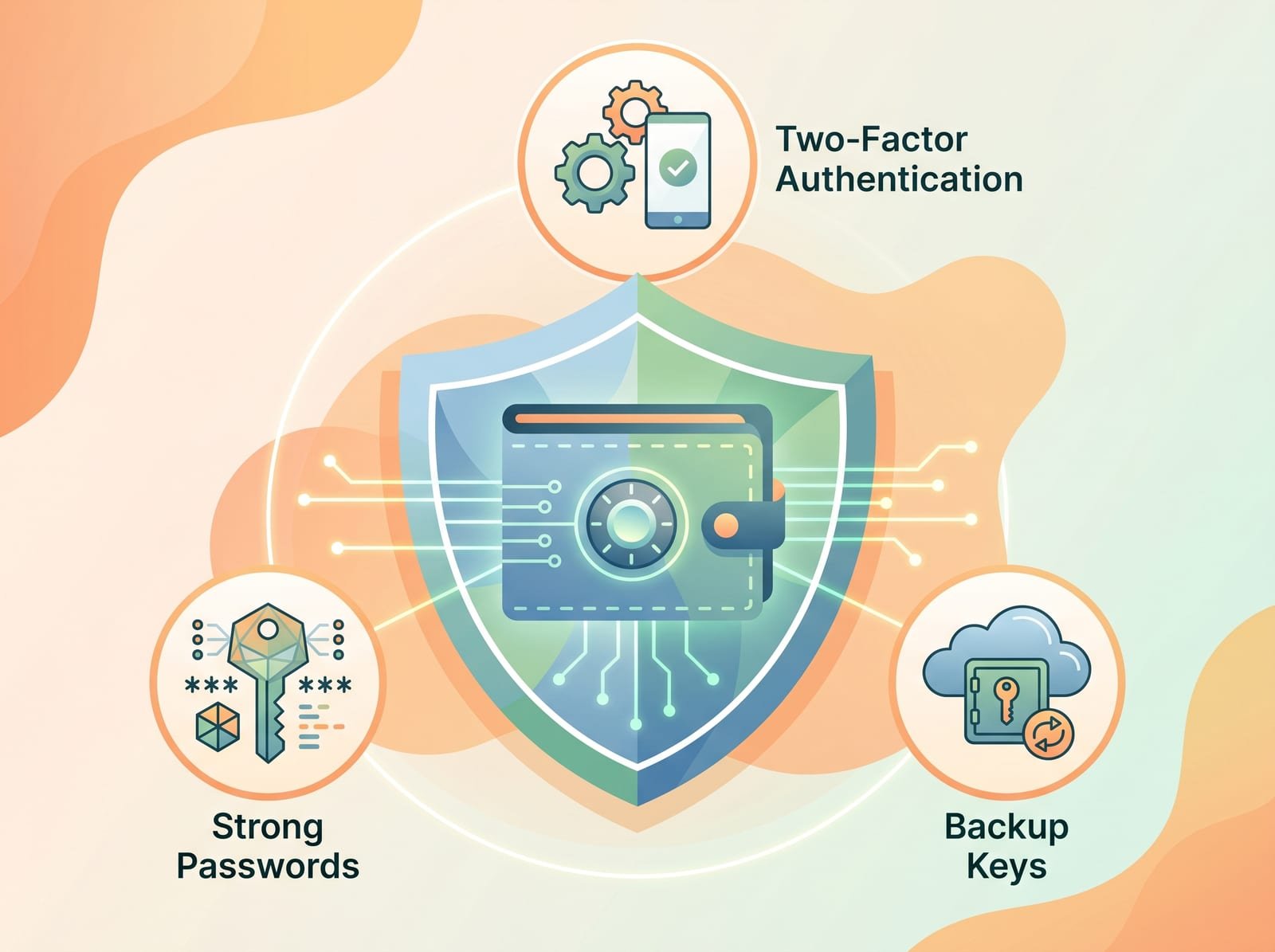
Security is a major concern when dealing with digital currencies. Here are some tips to keep your wallet and crypto safe:
This lesson was rewritten by Prison Professors for educational use, inspired by Binance Academy. The original article remains the property of its authors.
Legal disclaimer: This material has been prepared for general informational purposes only and should NOT be: (1) considered an individualized recommendation or advice; and (2) relied upon for any investment activities. All information is provided on an as-is basis and is subject to change without notice, we make no representation or warranty of any kind, express or implied, regarding the accuracy, validity, reliability, availability or completeness of any such information. Prison Professors Charitable Corporation does NOT provide investment, legal, or tax advice in any manner or form. The ownership of any investment decision(s) exclusively vests with you after analyzing all possible risk factors and by exercising your own independent discretion. Prison Professors Charitable Corporation shall not be liable for any consequences thereof.
After reading this lesson, reflect on the following questions. Write at least two to four paragraphs for each prompt. You may use your responses as journal entries or lesson reports on your Prison Professors profile.